
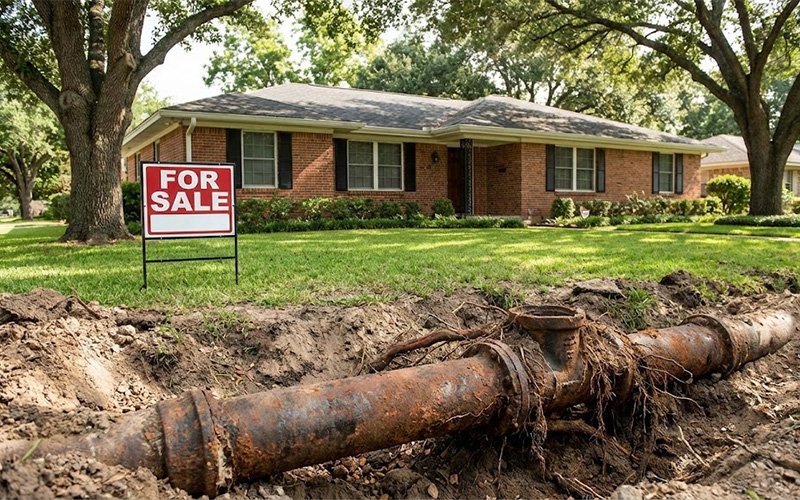
There is a lot to love about the older neighborhoods in Beaumont. From the historic homes in the Oaks Historic District to the mid-century ranches in the West End, these houses have character, big yards, and great bones.
But while you are admiring the original hardwood floors, you might be standing on top of a ticking time bomb. Plumbing standards have changed drastically over the last 50 years, and many of the materials used in the 1950s, 60s, and 70s are now reaching the end of their lifespan.
At AMC Plumbing, we often get calls from heartbroken homeowners who just moved in, only to face a $10,000 repair bill a month later. Before you sign on the dotted line, check for these three “deal breakers.”
1. Galvanized Steel Water Lines
If the house was built before 1980 and hasn’t been updated, there is a good chance it has galvanized steel pipes. You can identify them by their silver-grey color (unlike the copper or white plastic used today).
The Problem: Galvanized pipes rust from the inside out. While they might look fine on the outside, the interior is likely filled with rust buildup. This leads to:
- Low water pressure (like putting your thumb over a hose).
- Rusty, brown water coming out of the tap.
- Eventual leaks and bursts behind the walls.
The Fix: A complete whole-home re-pipe. This is a major expense you need to factor into your offer price.
2. Cast Iron Sewer Lines
Underneath that beautiful foundation lies the sewer line. In older Beaumont homes, this is almost certainly made of cast iron. Cast iron is durable, but it has a lifespan of about 50–60 years.
The Problem: Over decades, the bottom of the pipe rots away due to water erosion (we call this “channeling”). This allows jagged edges to catch toilet paper and debris, causing constant backups. Even worse, tree roots can easily punch through the corroded metal, blocking the line entirely.
The Fix: You cannot see this with the naked eye. You absolutely need a Sewer Camera Inspection to see the condition of the pipe underground.
3. The “Handyman Special” (Bad DIY Work)
Over the course of 40 years, a house sees many owners—and many “Do-It-Yourself” repairs. We often see dangerous shortcuts under sinks, such as:
- “S-Traps”: An outdated drain shape that can siphon water out of the trap, allowing sewer gas to smell up the house.
- Accordion Pipes: Those flexible white plastic tubes. They are prone to clogging and are generally not code-compliant.
- Mismatched Metals: Connecting copper directly to galvanized steel causes rapid corrosion (electrolysis).
Don’t Buy a Money Pit
A standard home inspector is great at checking the roof and the electrical panel, but they cannot see inside the pipes or underground.
Protect your investment. Before you close on that older home, call AMC Plumbing at +1 409-866-3030. We can perform a thorough plumbing audit, including a video camera inspection of the sewer line, so you know exactly what you are buying.