
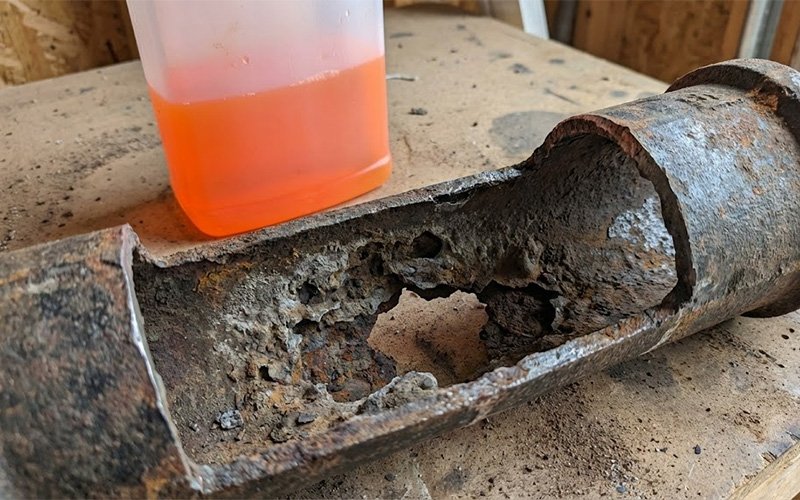
It’s a scenario we hear about every week at AMC Plumbing: You are washing dishes, the water stops draining, and panic sets in. You rush to the store, grab a jug of that neon-colored gel that promises to “melt clogs in minutes,” and pour the whole thing down the sink.
It seems like the easy, cheap fix. But as plumbers who have to fix the aftermath, we are here to tell you: Chemical drain cleaners are one of the worst things you can put in your pipes.
While they might clear a small blockage temporarily, the long-term damage they cause to your Beaumont home is rarely worth the $10 savings.
How Do They Actually Work?
Most commercial drain cleaners rely on caustic chemicals like lye (sodium hydroxide) or sulfuric acid. Their job is to create a chemical reaction that generates intense heat to melt grease or dissolve hair.
The problem? They don’t know the difference between the clog and your pipes.
3 Reasons to Ditch the Bottle
1. They Eat Your Pipes
In older Beaumont homes, many drain lines are made of galvanized steel or cast iron. The harsh acids in drain cleaners can eat through the corrosion inside these pipes, creating pinhole leaks or causing the bottom of the pipe to rot out completely. Even in modern PVC plastic pipes, the heat generated by the chemical reaction can warp or melt the plastic fittings.
2. They Are Dangerous for YOU
These chemicals are highly toxic. If the cleaner doesn’t work (which happens often with stubborn clogs), you are now left with a sink full of caustic, standing water. When our plumbers arrive to snake the drain, that acidic water can splash back, burning skin and eyes. Please, if you use these products, tell your plumber before they start working.
3. They Don’t Fix the Root Problem
Drain cleaners usually just burn a small hole through the center of the clog, allowing water to flow slowly. They leave the bulk of the sludge behind. Within a few weeks, that small hole fills up again, and you are back to square one.
The Safer Alternatives
Before you pour acid down your sink, try these mechanical methods first:
- The Plunger: It’s old school, but it works. A good plunger can use pressure to dislodge a blockage without damaging the pipe walls.
- The Plastic Zip-It Tool: For bathroom sinks, these cheap plastic tools can fish out hair clumps near the surface.
- Bio-Enzymatic Cleaners: These use natural bacteria to eat away organic waste over time. They are slow, but they are 100% safe for your pipes.
When to Call the Pros
If the plunger doesn’t work, the clog is likely deep in the line. You need a solution that removes the blockage physically, not chemically.
Stop hurting your pipes. If you have a slow drain, call AMC Plumbing at +1 409-866-3030. We use professional snakes and hydro-jetters to clear the problem safely and permanently.