
You know the sound. It’s late at night, the house is quiet, and you hear it: a faint hissing coming from the bathroom. Or maybe you hear the toilet suddenly “refill” itself even though nobody has used it in hours.
We call this “Phantom Flushing.” It is easy to ignore because it doesn’t seem like an emergency. There is no water on the floor, and the toilet still flushes fine. But ignoring a running toilet is one of the most expensive mistakes a homeowner can make.
At AMC Plumbing, we have seen running toilets waste more water in a month than a family of four uses for showering. Here is why it happens and how to stop the drain on your wallet.
The Cost of the Drip
A “running” toilet is essentially an open faucet. Even a medium-sized leak can waste up to 200 gallons of water per day. That is 6,000 gallons a month.
In Beaumont, where water and sewer rates are rising, that single bad part in your toilet tank could add $50, $100, or even more to your monthly utility bill. Over the course of a year, you are literally flushing hundreds of dollars down the drain.
The Usual Suspect: The Flapper
90% of the time, the culprit is a $10 rubber part called the flapper. This is the rubber seal at the bottom of the tank that lifts up when you push the handle.
Over time, the chlorine and minerals in our city water attack the rubber, causing it to warp, harden, or blister. Once the seal isn’t perfect, water slowly trickles from the tank into the bowl. When the water level in the tank drops low enough, the float drops, and the toilet turns on to refill itself. That is the “phantom flush.”
The 5-Minute “Food Dye” Test
Not sure if your toilet is leaking? Here is a simple trick you can do right now without any tools.
- Take the lid off the toilet tank.
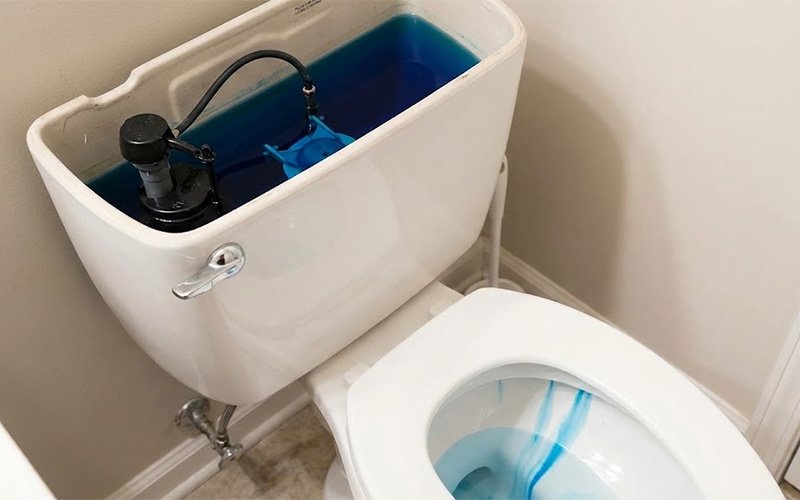
- Put 10 drops of dark food coloring (red or blue works best) into the tank water.
- Do not flush. Wait about 15 to 20 minutes.
- Look at the water in the toilet bowl.
If the water in the bowl has turned blue or red, you have a leak. The colored water from the tank is seeping past the flapper.
Should You Fix It Yourself?
Replacing a flapper is a common DIY project, but it isn’t always as simple as it looks. Universal flappers often don’t fit older toilets correctly, and sometimes the problem isn’t the flapper at all—it’s a corroded flush valve seat or a broken fill valve.
If you have tried to fix it but the hissing continues, or if the bolts inside the tank look rusted and ready to snap, don’t force it.
Stop the waste today. Call AMC Plumbing at +1 409-866-3030. We carry high-quality parts that withstand local water conditions, ensuring your toilet stays quiet and your water bill stays low.